


The Art and Innovation of Paintless Dent Repair: A Look Inside the World of PDR with Texas Dents
7018892985 • April 24, 2025
A Look Inside the World of PDR with Texas Dents
Ever wonder how certain things came to be? Like who first figured out that a strange collection of rods, hooks and wedges could quietly massage a dent out of a car—without ever touching a drop of paint? Yeah, we wonder about that too. And as it turns out, the answer is part old-world craftsmanship, part modern science and entirely fascinating. Today, Texas Dents is taking you behind the panels into the history, tools, techniques and the modern-day artistry of PDR.
Paintless Dent Repair (PDR) may seem like a recent breakthrough, but it actually has a rich history dating back nearly a century. What started as a secret skill behind the scenes at luxury car factories has grown into one of the most trusted and refined techniques in automotive care.
The History of Paintless Dent Repair
While PDR feels like a modern marvel, its origins date back nearly a century. In the 1930s and ‘40s, Mercedes-Benz factory workers in Germany began using specialized hand tools to massage dents out of car panels during final inspections. These artisans didn’t rely on fillers or paint—they reshaped the metal from the inside, leaving no trace behind. At the time, this was a niche, internal factory skill, not a public-facing service.
Fast forward to the 1980s, and this skillset made its way to the United States. As more technicians recognized the potential of these techniques, Paintless Dent Repair evolved from a behind-the-scenes method to a commercial service offered by trained professionals. Hail-prone regions like Texas helped accelerate PDR’s popularity, especially as insurance companies began covering it as a reliable, cost-effective repair solution.
Today, PDR is not only a trusted solution for everyday drivers—it’s the go-to method for dealerships, luxury vehicle owners and collectors who want to retain original factory paint and finish.
The Tools That Make PDR Possible
PDR is part art, part science and the tools reflect that. As technicians, we use a wide variety of specialized rods, hooks and paddles—many of which are hand-crafted or custom-engineered for specific tasks. Each tool is designed to apply precise pressure from behind the panel without damaging the paint or warping the metal.
Here are a few of the key PDR tools:
Rod Tools
Long steel rods with angled tips are used to reach behind doors, hoods, and fenders. Their shapes vary to accommodate tight curves and complex panel contours.
Long steel rods with angled tips are used to reach behind doors, hoods, and fenders. Their shapes vary to accommodate tight curves and complex panel contours.
Whale Tails
These flat, wide tools are perfect for slipping into braces and tight gaps to work out dents in hard-to-reach areas.
These flat, wide tools are perfect for slipping into braces and tight gaps to work out dents in hard-to-reach areas.
Window Wedges & Door Hooks
These are used to gain access to the inside of door panels without removing the glass or interior trim.
These are used to gain access to the inside of door panels without removing the glass or interior trim.
LED & Fluorescent Light Boards
Lighting is crucial in PDR. Technicians use high-contrast lighting boards to see every detail of a dent and track their progress in real time.
Lighting is crucial in PDR. Technicians use high-contrast lighting boards to see every detail of a dent and track their progress in real time.
Glue Pulling Kits
In situations where access behind the panel isn’t possible, technicians use a special glue to pull the dent outward. The glue is then safely removed without harming the paint.
In situations where access behind the panel isn’t possible, technicians use a special glue to pull the dent outward. The glue is then safely removed without harming the paint.
The PDR Process: Patience, Precision & Panel Access
Contrary to what many believe, PDR is not just a “pop-it-out” job. And our friends who try it themselves at home with a kit they bought on eBay and a YouTube video know this to be true! Lol. It's A LOT harder than it looks.
It requires finesse and years of hands-on training. We've worked on every kind of vehicle there is for nearly 20 years, so we have a deep understanding of vehicle anatomy that many PDR shops don't possess.
It requires finesse and years of hands-on training. We've worked on every kind of vehicle there is for nearly 20 years, so we have a deep understanding of vehicle anatomy that many PDR shops don't possess.
Here’s what a typical PDR process involves:
Inspection & Lighting Setup
As technicians, we evaluate the dent using light boards to map the depth, size and angle of the damage.
Access Planning
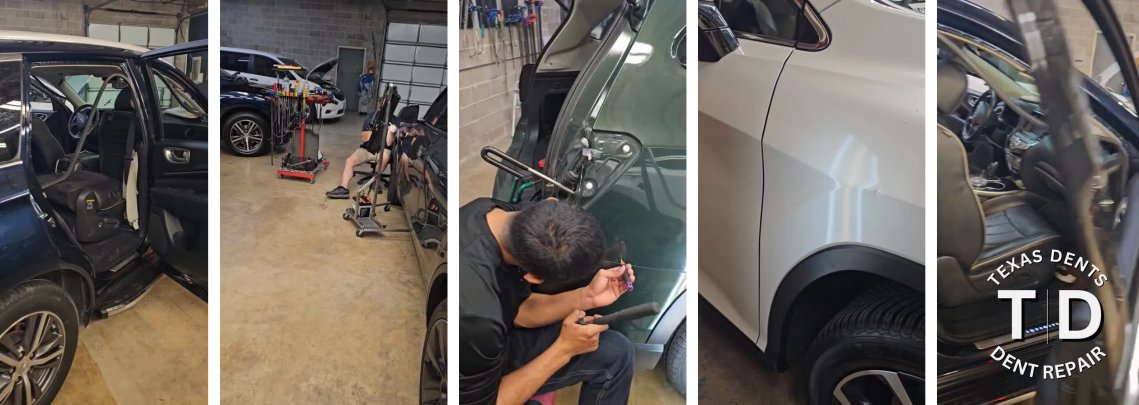
Depending on the dent’s location, we may need to partially disassemble the vehicle—removing inner door panels, trim, headliners or other components—to reach the affected area.
Tool Selection & Adjustment
Once access is gained, we chooses the right tool and begin to slowly massage the dented metal back into shape. And this is done millimeter by millimeter. It's a painstaking process if you do it right. This part of the process can take anywhere from 30 minutes to several hours.
Finishing & Polishing
After the dent is repaired, the area may be buffed or polished to restore shine and blend the repair seamlessly with the surrounding panel.
Because no painting or body filler is involved, the original finish remains untouched—a major advantage for resale value, especially on classic or high-end vehicles.
Why PDR Is the Preferred Choice
Paintless Dent Repair offers multiple advantages:
- The factory finish is untouched, maintaining the vehicle’s original appearance.
- Most PDR services are completed in hours—not days or weeks like traditional body shop repairs.
- Without the need for painting, materials, or extensive labor, PDR is typically much more affordable.
- No chemicals, solvents, or fillers are used, making it a greener solution for dent repair.
- When performed by skilled technicians at Texas Dents, the results are virtually invisible.
Why Choose Texas Dents for PDR
Texas Dents specializes in high-quality Paintless Dent Repair (PDR), proudly serving Austin, San Antonio, and Dallas with unmatched expertise and fast, affordable service. We restore vehicles to their original condition without the need for repainting, preserving their factory finish and value. We’re proud of our exceptional reviews, reflecting our unmatched reputation for quality and customer satisfaction. If your vehicle suffered hail damage in this storm, Texas Dents is the trusted choice for flawless repairs. We've been serving San Antonio area car dealerships for more than 15 years. Connect with us online for an estimate
or you can call our San Antonio shop.
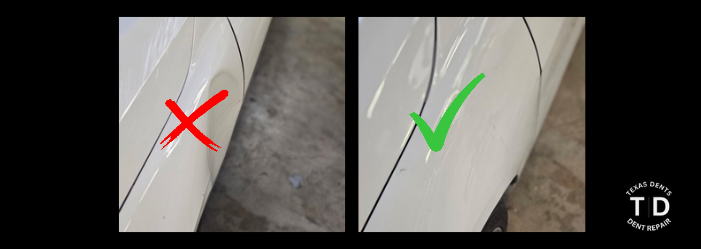
Parking lot dings happen fast. Learn how paintless dent repair helps Texas drivers fix door dings, small dents and creases without repainting.
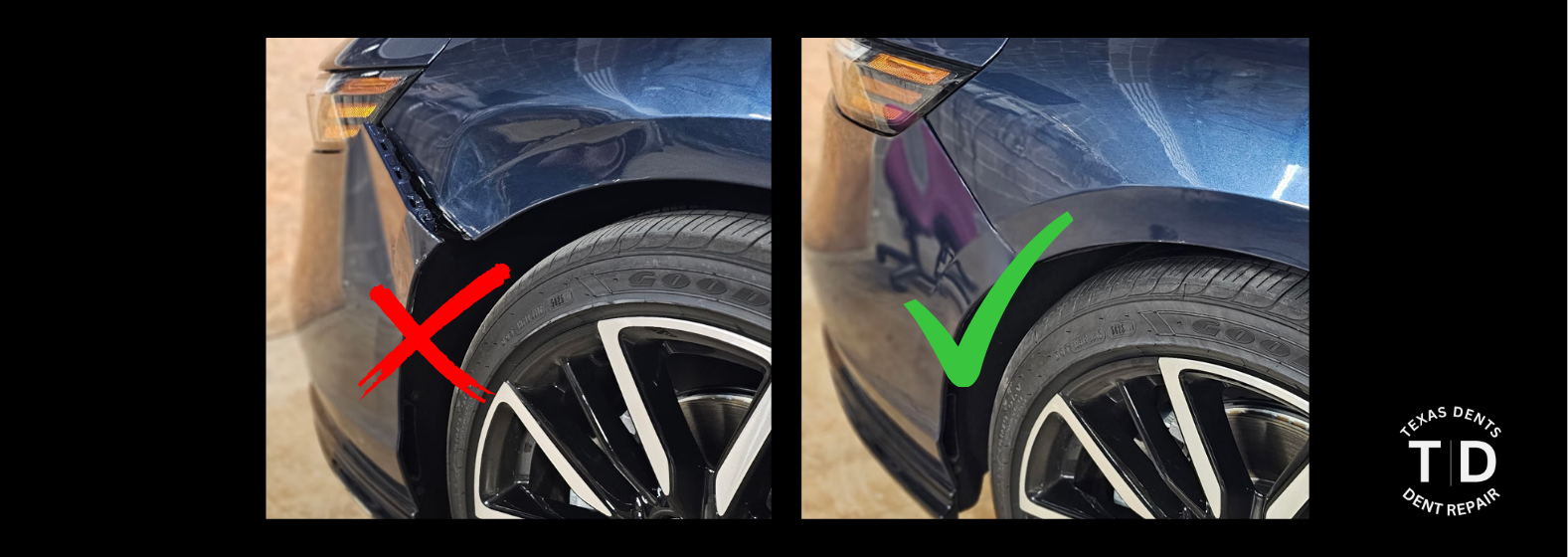
Back-to-school season is a smart time to fix door dings, hail damage and other dents with paintless dent repair from Texas Dents experts in Dallas and San Antonio.
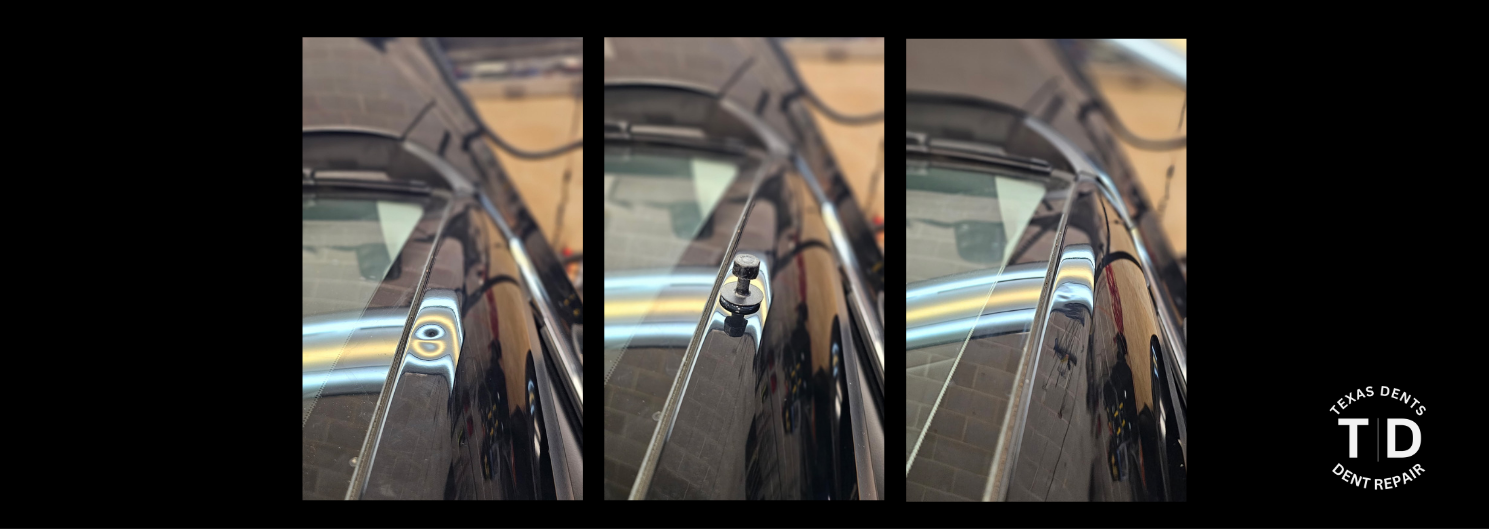
Wondering what paintless dent repair can fix? Learn how PDR handles creases, hail damage, body-line dents, larger dents and more from Texas Dents experts.
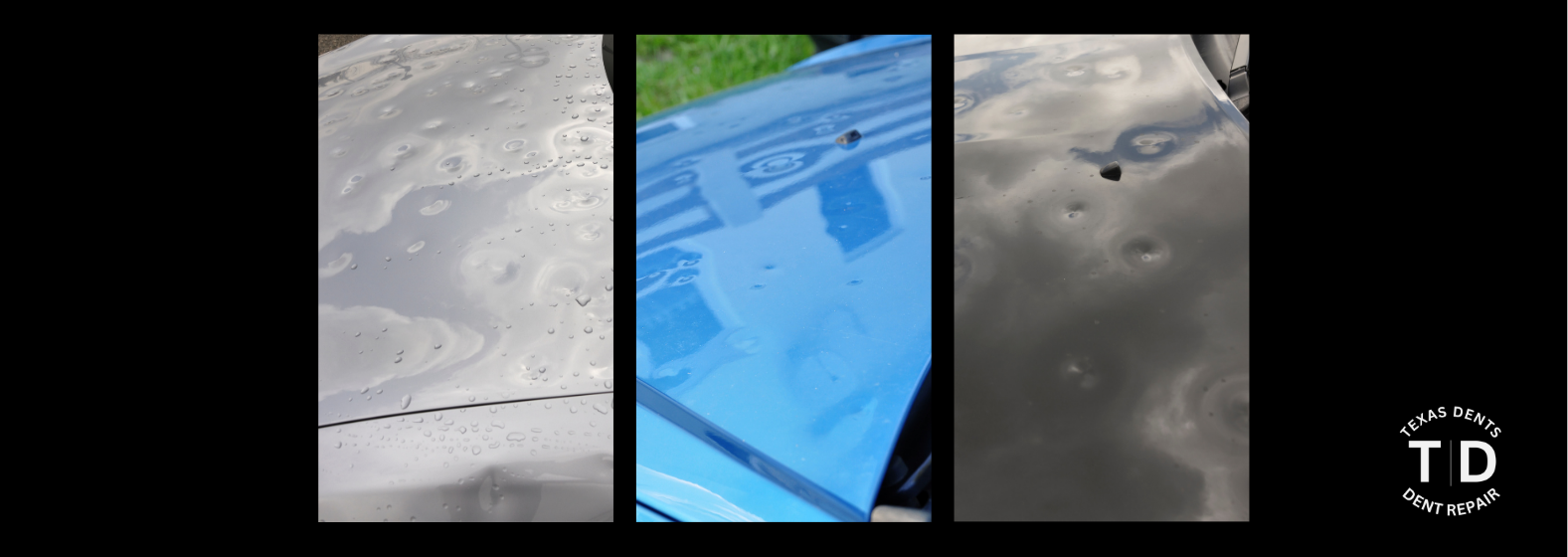
San Antonio storms bring hail, flooding and dents. Learn how PDR fixes storm damage and protects your vehicle’s value.
Texas hail season is back. See the biggest hailstorms in San Antonio and Dallas and learn how paintless dent repair restores vehicles after hail damage.
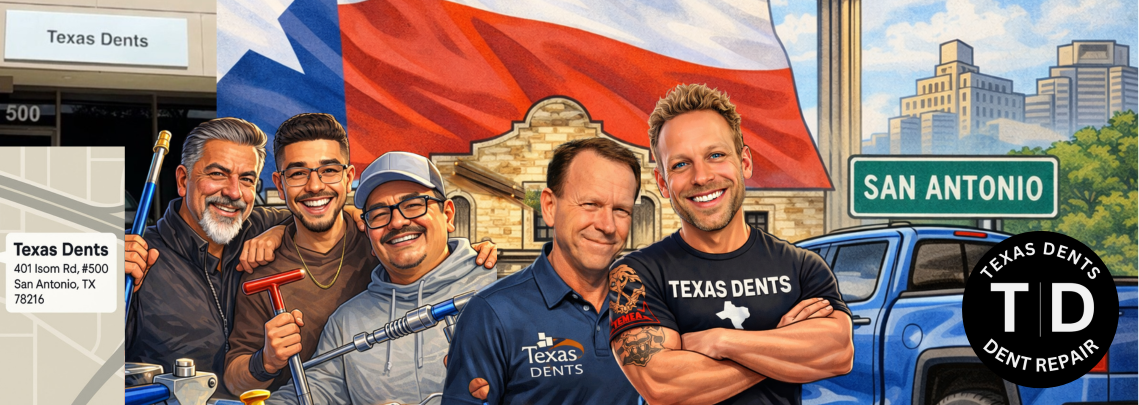
From everyday dings to major hail damage, Texas Dents has served San Antonio and Dallas drivers with expert PDR and trusted integrity for over a decade.
Texas-friendly tips to winter-proof your vehicle during freezes and icy mornings—easy car prep for Dallas, Austin, and San Antonio drivers.
Even small dents can lead to big repair bills. Learn why regular body inspections and early paintless dent repair save Texas drivers time and money.
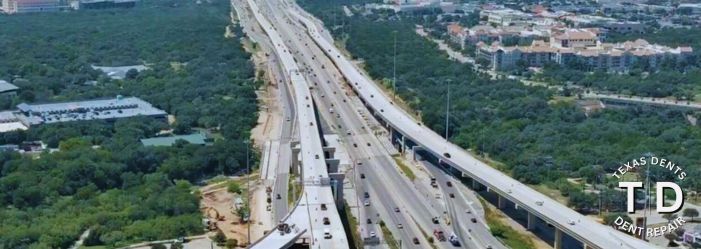
With major I-35 and Loop 1604 projects underway, small dents are inevitable. Discover how Texas Dents keeps Central Texas drivers dent-free with expert PDR.

Discover how fall weather and tropical storms affect hail damage in Texas. Stay ahead with expert paintless dent repair in San Antonio & Dallas.
Share On: