


Texas Hail Season Is Back: Top 10 Biggest Storms to Hit San Antonio and Dallas in the Last 10 Years
7018892985 • March 10, 2026
A look back at the storms that dented thousands of vehicles—and why Texas drivers should be prepared for what may come this spring.
Over the past decade, hailstorms across San Antonio and Dallas have left an estimated 300,000 vehicles dented
by ice falling from the sky. From golf-ball-sized hail pounding parking lots to grapefruit-sized stones smashing windshields, Texas storms have a way of turning an ordinary afternoon into a costly repair overnight. With another Texas hail season approaching, drivers across Central and North Texas are once again keeping an eye on the forecast—and hoping their vehicles won’t be the next victims of one of nature’s most destructive weather events.
As we approach another hail season, Texas Dents
is looking back at some of the largest hailstorms to hit San Antonio, Dallas and North Texas over the past decade. These storms didn’t just produce dramatic weather—they caused billions of dollars in property and vehicle damage and left thousands of drivers searching for reliable hail repair.
Understanding the history of these storms can help drivers prepare for what may come next—and know where to turn if hail strikes.
Why Texas Gets So Much Hail
Texas sits in one of the most active severe weather regions in the United States. Warm, humid air from the Gulf of Mexico collides with cooler, drier air moving across the Plains. When those air masses meet, they create powerful thunderstorms with strong updrafts capable of producing large hailstones.
That’s why hail season in San Antonio and Dallas typically runs from March through June, with April and May producing the most severe storms. These storms can produce hail anywhere from quarter-sized to baseball-sized—or even larger. When hail reaches that size, it can easily dent vehicles, damage roofs, and shatter windows.
Top Hail Storms in Texas Over the Last 10 Years
Here are some of the most notable hailstorms to impact drivers across San Antonio, Dallas, and surrounding Texas communities in the past decade.
#1. April 12, 2016 – San Antonio’s Historic Hailstorm
This storm is still remembered as one of the most destructive hail events in San Antonio history.
Hail size: Up to 4.5 inches
Damage: Over $1.4 billion
Vehicles affected: More than 100,000
Grapefruit-sized hail slammed neighborhoods across the city, especially on the north and northeast sides. Parking lots were filled with damaged cars and our shop was FULL of dent cars for nearly a year. For many drivers, it was the first time they learned about paintless dent repair (PDR) as a faster and more cost-effective alternative to traditional body work.
#2. April 2017 – Dallas–Fort Worth Severe Hail Outbreak
North Texas experienced a major outbreak of severe storms that produced golf-ball to baseball-sized hail across the Dallas–Fort Worth metroplex.
Thousands of vehicles were damaged in areas like Plano, Frisco, and Arlington. Insurance claims skyrocketed as hail pounded vehicles parked in driveways, parking lots, and office complexes.
#3. May 2018 – San Antonio Spring Storms
Several strong storms moved through the San Antonio area during the peak of hail season damaging between 15-20k vehicles.
Hail ranging from ping-pong ball to golf ball size damaged vehicles across Bexar County and surrounding Hill Country communities.
For many drivers, the damage wasn’t immediately noticeable until sunlight revealed the dents covering their hoods and roofs.
#4. June 2019 – North Texas Hailstorm
Late spring storms brought severe weather to the Dallas area, including large hail and high winds.
This storm was notable because it hit heavily populated suburbs where 30-40k vehicles were parked outdoors overnight.
#5. April 2020 – Central Texas Severe Weather
Even during a quieter severe weather year overall, Central Texas still experienced several storms capable of producing damaging hail.
These storms highlighted how hail can occur quickly and unexpectedly, even outside the most active months. Between 15-20k vehicles were damaged in this storm.
#6. May 2021 – Central Texas Hail Event
Multiple storms swept across the region during the 2021 severe weather season damaging 20-25k vehicles.
Drivers across the San Antonio and Austin corridor reported hail ranging from quarter-size to golf-ball-size, causing widespread vehicle damage.
#7. April 2022 – Dallas Metroplex Hailstorm
North Texas experienced another round of severe storms producing large hail across the metro area.
In heavily populated cities like Dallas, even a brief hailstorm can damage thousands of vehicles in minutes.
#8. May 2023 – Hill Country Hail Storms
Storms moving through the Hill Country produced pockets of large hail affecting communities around San Antonio.
These storms demonstrated how hail can vary dramatically from one neighborhood to the next, leaving some areas untouched while others experience heavy damage.
#9. March 31, 2025 – Early Season San Antonio Storm
An early-season storm surprised many residents with ping-pong-ball-sized hail and strong winds across parts of San Antonio.
Because the storm arrived early in the year, many drivers hadn’t yet started thinking about hail season, but it ended up damaging near 10k vehicles.
#10. May 2025 – Memorial Day Hailstorm
Just before the start of summer, another strong storm produced golf-ball-sized hail across parts of the San Antonio metro area.
Dozens of hail reports were recorded throughout the region, reminding residents that severe weather can continue well into late spring.
What These Storms Mean for Texas Drivers
Looking back at these storms, one thing becomes clear: hailstorms in Texas are not rare events—they’re part of a yearly pattern.
Most major hailstorms in San Antonio and Dallas occur during:
- Late March
- April
- May
- Early June
And because Texas cities are growing rapidly, more vehicles are parked outdoors than ever before. That means even moderate hailstorms can damage thousands of cars at once.
What To Do After a Hailstorm
If your vehicle is caught in a hailstorm, the first step is to inspect it carefully once the storm passes.
Look for:
- Small dents on the hood, roof, or trunk
- Cracked or chipped windshields
- Damage around door frames or side panels
- Broken mirrors or lights
Even small dents can reduce the value of your vehicle if left untreated. Fortunately, modern repair methods make fixing hail damage easier than ever.
Why Paintless Dent Repair Is the Preferred Solution
When hail damages a vehicle, many drivers assume they need expensive body shop repairs and repainting. In reality, most hail damage can be repaired using paintless dent repair (PDR).
Paintless dent repair works by gently massaging dents out from behind the panel, restoring the original shape of the metal without sanding, fillers, or repainting.
Benefits of PDR include:
- Preserves your vehicle’s factory paint
- Faster repair times
- Lower cost than traditional body repair
- Maintains vehicle resale value
For hail damage, PDR is often the most efficient and effective repair method available.
Trust Texas Dents for Expert Hail Repair
When hail season arrives in Texas, drivers need a repair team they can trust. Texas Dents has become a trusted name in paintless dent repair across San Antonio and Dallas, helping drivers restore their vehicles quickly and professionally after hailstorms.
From small door dings to widespread hail damage, the experienced technicians at Texas Dents use advanced PDR techniques to return vehicles to their original condition without unnecessary repainting or body work. With Texas hail season approaching, knowing where to turn for expert repair can make all the difference. Connect with us today for a free estimate.
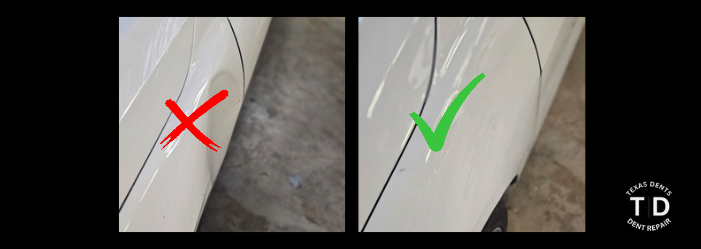
Parking lot dings happen fast. Learn how paintless dent repair helps Texas drivers fix door dings, small dents and creases without repainting.
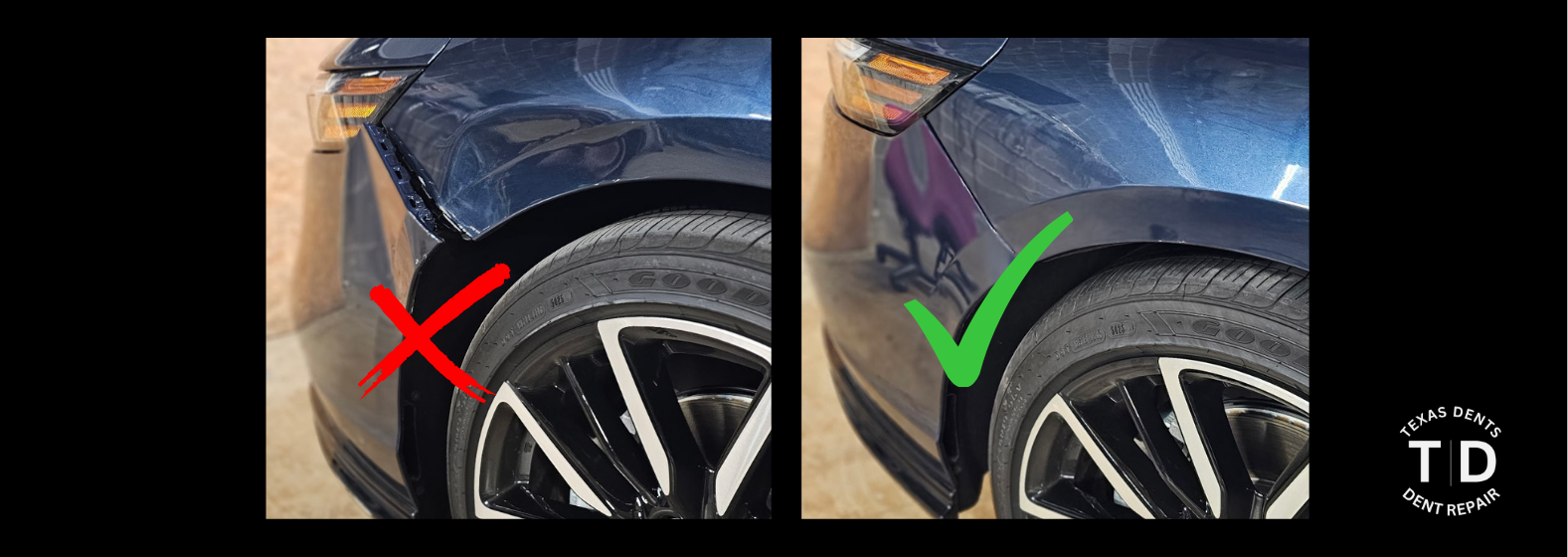
Back-to-school season is a smart time to fix door dings, hail damage and other dents with paintless dent repair from Texas Dents experts in Dallas and San Antonio.
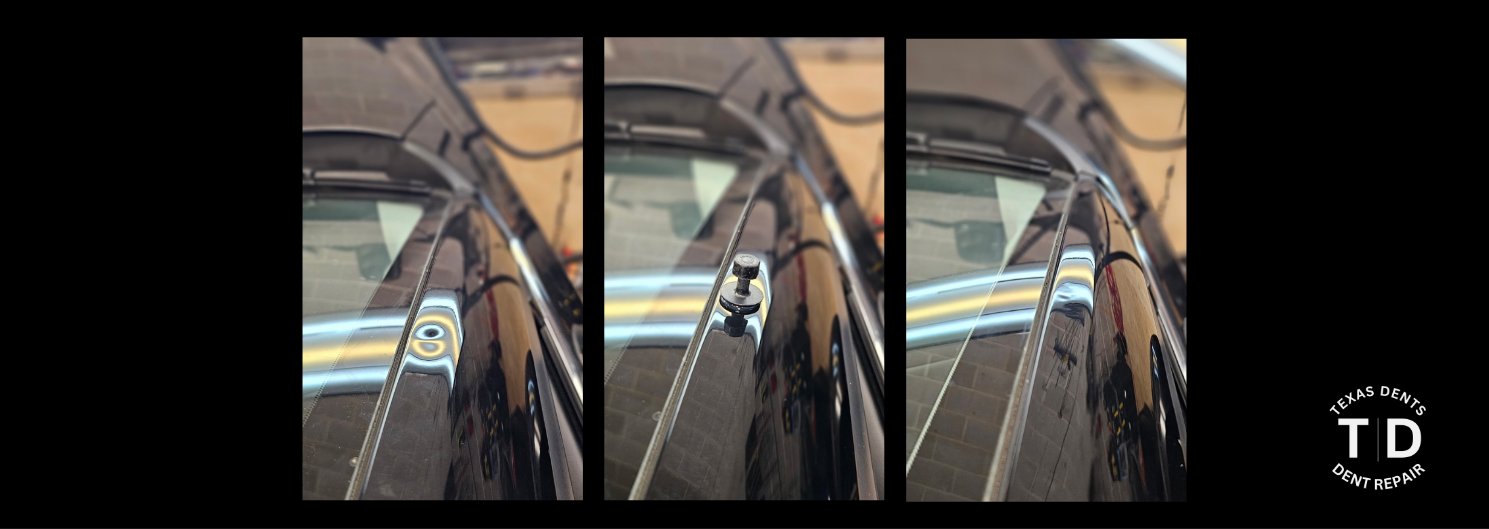
Wondering what paintless dent repair can fix? Learn how PDR handles creases, hail damage, body-line dents, larger dents and more from Texas Dents experts.
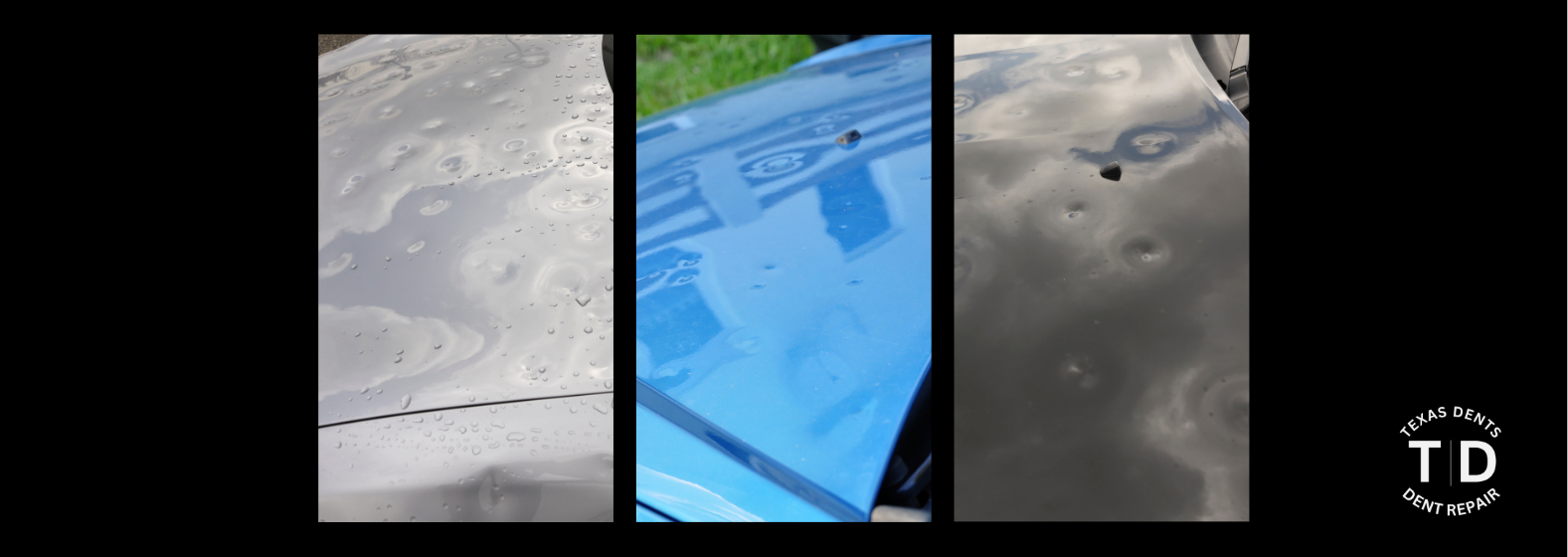
San Antonio storms bring hail, flooding and dents. Learn how PDR fixes storm damage and protects your vehicle’s value.
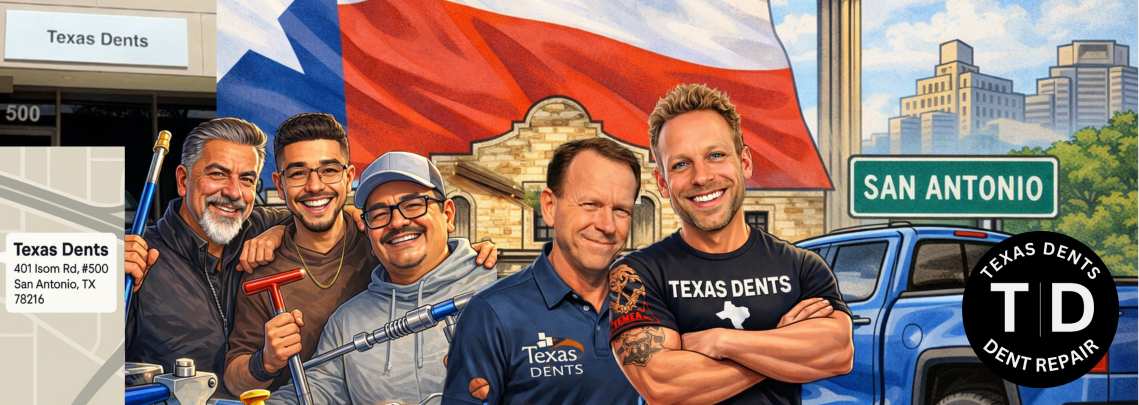
From everyday dings to major hail damage, Texas Dents has served San Antonio and Dallas drivers with expert PDR and trusted integrity for over a decade.

Texas-friendly tips to winter-proof your vehicle during freezes and icy mornings—easy car prep for Dallas, Austin, and San Antonio drivers.

Even small dents can lead to big repair bills. Learn why regular body inspections and early paintless dent repair save Texas drivers time and money.
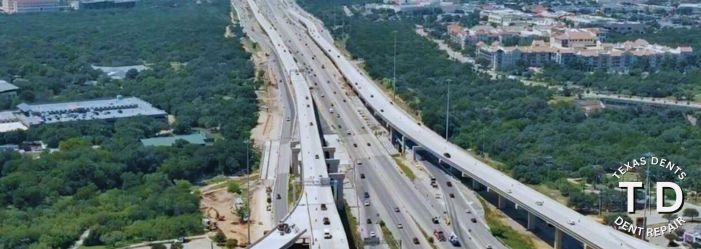
With major I-35 and Loop 1604 projects underway, small dents are inevitable. Discover how Texas Dents keeps Central Texas drivers dent-free with expert PDR.

Discover how fall weather and tropical storms affect hail damage in Texas. Stay ahead with expert paintless dent repair in San Antonio & Dallas.
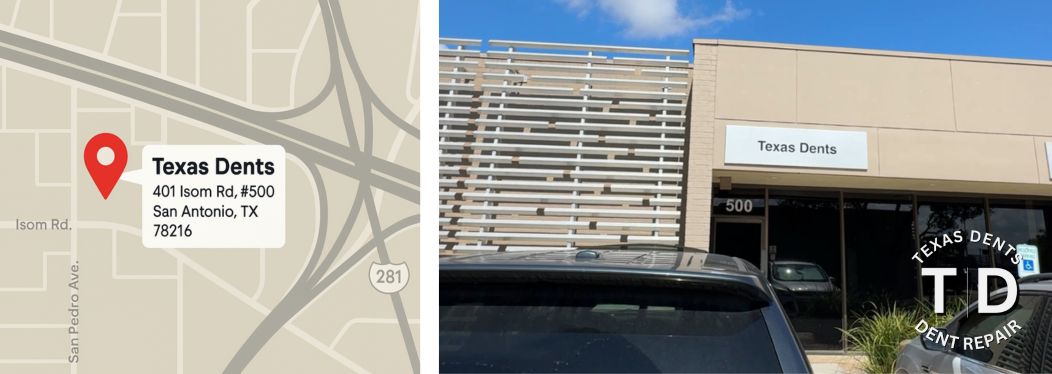
When it comes to protecting your car’s value, appearance and performance, choosing the right dent repair shop matters. Across Texas, Texas Dents has built its reputation as the trusted name in paintless dent repair (PDR), delivering precision results for dealerships and individual car owners alike. At our San Antonio location, customers enjoy not only expert craftsmanship but also a convenient and accessible facility at 401 Isom Road, Suite 500. With plenty of parking, a large and modern garage and a team of skilled professionals, Texas Dents stands out as the go-to solution for hail damage, door dings and all forms of non-invasive dent removal. A Prime San Antonio Location One of the standout benefits of the San Antonio shop is its prime location at 401 Isom Road, just minutes from the San Antonio International Airport and central thoroughfares like Loop 410 and Highway 281. This makes it easy for customers across the city—and even surrounding communities—to drop off their vehicles without hassle. Unlike crowded, hard-to-find repair shops tucked into strip malls or hidden behind dealerships, Texas Dents in San Antonio offers plenty of parking in both the front and back of the building, ensuring a smooth, stress-free visit. Whether you’re stopping by for an estimate or leaving your car for more extensive hail repair, accessibility is never an issue. State-of-the-Art Garage Our San Antonio shop features a large, beautiful garage space designed with efficiency and customer service in mind. Paintless dent repair requires precision, specialized lighting and room to maneuver around vehicles. Texas Dents has invested in creating a professional environment where their technicians can work to the highest standards. Bright, well-lit garage ideal conditions for spotting and repairing dents Ample workspace ensures vehicles are handled with care and remain protected while repairs are underway Clean, modern facilities give customers peace of mind that their car is in good hands For dealerships, this kind of facility is especially important. Moving multiple cars in and out quickly, safely, and professionally is a top priority—and Texas Dents delivers. Why Dealerships Trust Texas Dents San Antonio dealerships have their pick of repair shops, but time and again they choose Texas Dents because of the company’s proven expertise, efficiency, and customer service. For dealerships, reputation and turnaround time are everything. Having a trusted partner like Texas Dents allows them to maintain high standards for their inventory and customer satisfaction. Benefits for Dealerships: Fast, high-volume service Texas Dents can handle multiple cars at once, helping dealerships restore hail-damaged fleets quickly. Consistent quality Every dent is repaired with the same precision and care, ensuring vehicles are lot-ready. No paint, no fillers Because PDR preserves the factory finish, dealerships avoid devaluing vehicles with repaint jobs. Professional partnership The Texas Dents team communicates clearly, delivers on deadlines, and ensures dealerships can keep their promises to buyers. For dealerships looking for reliability, Texas Dents is more than a repair shop—it’s a trusted extension of their business. Why Customers Choose Texas Dents For individual car owners, the decision to visit Texas Dents often comes after a frustrating moment: walking out to find their car covered in hail dents, spotting a door ding from a parking lot, or noticing minor body damage after a storm. These situations are stressful, but Texas Dents makes the process simple and reassuring. What Customers Love: Convenience The Isom Road location is easy to find, with parking available right in front of the shop. Expertise Skilled technicians use advanced tools and years of experience to restore vehicles to like-new condition. Value Because paintless dent repair preserves the original paint and panels, cars maintain their factory finish and resale value. Transparency Customers receive honest assessments and clear estimates—no surprises, no upselling. Advantages of Paintless Dent Repair Texas Dents specializes exclusively in PDR, which has become the gold standard for addressing hail and minor body damage. Unlike traditional body shop repairs, which often require sanding, body filler and repainting, PDR works with the metal itself, gently massaging dents out from the inside. Key Benefits of PDR: Preserves the original paint finish Maintains vehicle value Faster turnaround times than traditional bodywork Environmentally friendly (no chemicals or paints used) Often covered by insurance for hail damage By focusing on this one highly specialized skill, Texas Dents has become a leader in the field, trusted by dealerships and individual customers across San Antonio. Frequently Asked Questions Where is Texas Dents located in San Antonio? Texas Dents is conveniently located at 401 Isom Road, Suite 500, San Antonio, TX 78216, near major highways and the San Antonio International Airport. Is there parking available at the shop? Yes. Customers enjoy plenty of parking in both the front and back of the building, making drop-offs and pick-ups simple. Why should I choose PDR over traditional dent repair? PDR preserves your vehicle’s original paint and finish, maintains resale value, and is usually quicker and less costly than traditional bodywork. Do dealerships really use Texas Dents? Absolutely. Many local dealerships trust Texas Dents for hail repair and dent removal because of their ability to handle high-volume work quickly and with consistent quality. Why Choose Texas Dents for Paintless Dent Removal At Texas Dents San Antonio, everything is designed with the customer in mind. From the convenient Isom Road location and ample parking to the spacious garage and skilled technicians, every detail reinforces their reputation as the trusted name in PDR. Dealerships rely on them to keep their inventory flawless, and individual customers count on them to restore peace of mind after hailstorms or everyday mishaps. If you’re searching for expert dent repair in San Antonio, look no further than Texas Dents. With a commitment to quality, convenience, and customer satisfaction, they’re not just repairing cars—they’re restoring confidence, one dent at a time. For dealerships, this kind of facility is especially important. Moving multiple cars in and out quickly, safely, and professionally is a top priority—and Texas Dents delivers. Connect with us today for an estimate !
Share On: