
Can PDR Fix That? Answers to the Paintless Dent Repair Questions We Hear Most
From creases and body-line dents to hail damage and larger hits, here’s what paintless dent repair can really fix.
If you have a dent in your car, there’s a good chance your first question isn’t, “What is paintless dent repair?” It’s much simpler:
Can PDR fix this?
That’s the question we hear all the time at Texas Dents. Sometimes it’s about a sharp crease running through a door. Sometimes a Texas hailstorm has left a hood or roof covered with a dozen or more dents. Other times, someone has a surprisingly large dent and assumes there’s no way it can be repaired without replacing or repainting the panel.
The answer is often better than people expect.
Paintless dent repair, or PDR, can correct many different types of automotive dents while preserving the vehicle’s existing finish. But every dent is different. Size matters, but so do depth, location, metal stretch, paint condition and access behind the panel.
Here are some of the real questions we get about PDR and what actually determines whether a repair is possible.
Can PDR Get a Crease Out?
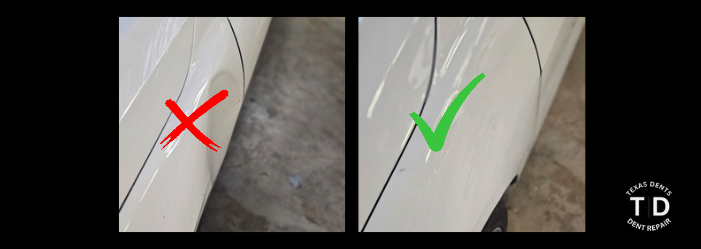
Yes, many creases can be repaired with PDR, including some that look pretty intimidating.
A crease is different from a typical round door ding. Instead of the metal being pushed inward in one relatively smooth area, it has been folded or pinched along a line. That creates more tension in the panel and can stretch the metal along the crease.
That doesn’t automatically mean you need a traditional body shop.
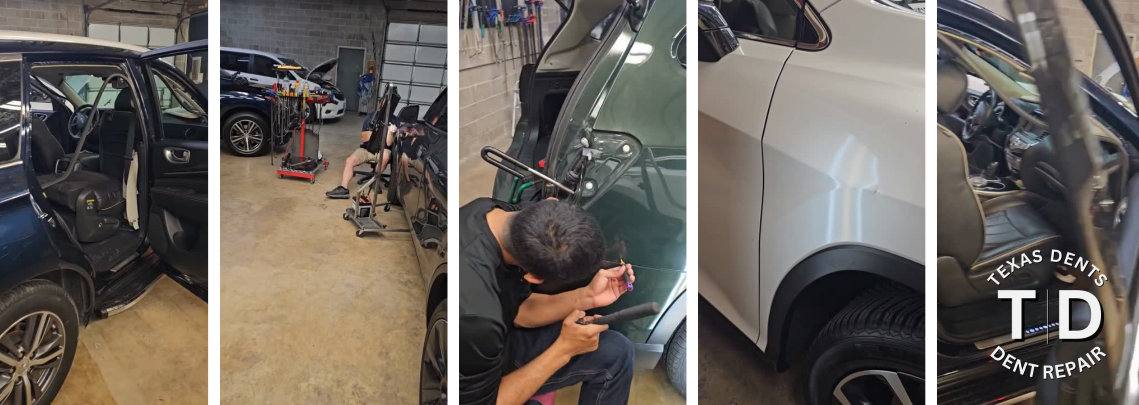
An experienced PDR technician can gradually work along the crease, making very small adjustments to bring the metal back toward its original shape. Depending on the damage, we may work from behind the panel using specialized rods or use glue-pulling techniques from the outside when backside access is limited.
The biggest factors are the sharpness of the crease and the condition of the paint. A softer crease with intact paint can be an excellent PDR candidate. A severe fold with cracked paint or heavily stretched metal may require conventional body repair.
The important thing is not to rule out PDR just because the damage has a line through it. We’ve seen plenty of creases that looked much worse than they actually were to repair.
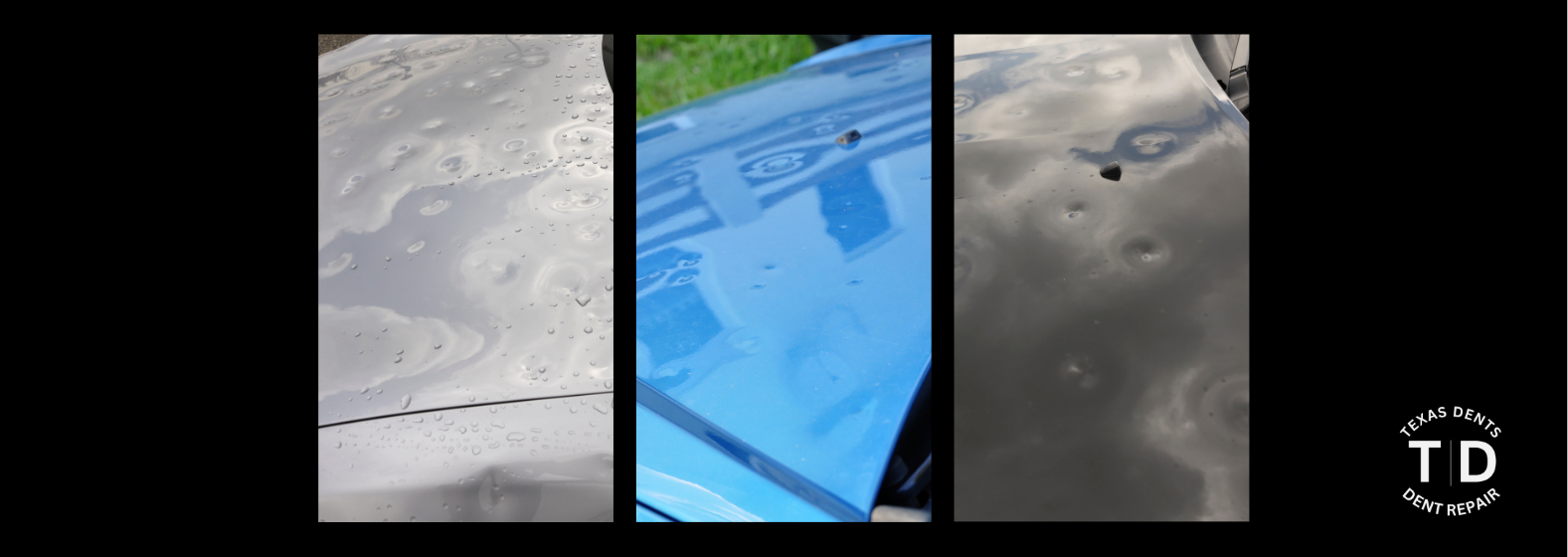
Can PDR Fix Hail Damage With a Dozen Dents?
Absolutely. In fact, hail damage is one of the most common uses for paintless dent repair.
And a dozen dents isn’t necessarily a lot in the PDR world. After a major Texas hailstorm, a vehicle may have dents scattered across the hood, roof, trunk, fenders and doors. Each dent is assessed individually and repaired one at a time.
The process takes patience. There isn’t one big trick that suddenly makes an entire hail-damaged panel smooth again. A technician works systematically across the vehicle, carefully restoring each low spot while monitoring the panel under specialized lighting.
PDR is especially well suited to hail damage when the factory paint is still intact because it avoids unnecessary sanding, body filler and repainting.
There is a limit, though. Extremely severe hail can stretch metal, crack paint or damage trim and glass. That’s why we need to see the vehicle before telling you exactly what can be restored through PDR.
Is a Dent Too Big for PDR?
People are often surprised by this one.
A dent does not have to be small to qualify for paintless dent repair.
Some large, shallow dents can actually be more repairable than a tiny, extremely sharp one. What matters is how the metal moved when the damage occurred.
Picture a broad dent in the middle of a door. The affected area may be large, but if the metal was pushed inward gradually and the paint remained intact, an experienced technician may be able to carefully reshape the entire area.
Now compare that with a quarter-sized dent that was struck by something pointed. It may be much smaller, but if the impact sharply stretched the metal or cracked the finish, it could be the more challenging repair.
That’s why we never judge a dent by diameter alone.
What About a Dent on a Body Line?
Body lines are those defined creases manufacturers design into doors, fenders and quarter panels. When one gets hit, the dent can look especially dramatic because it distorts a feature that is supposed to be perfectly straight.
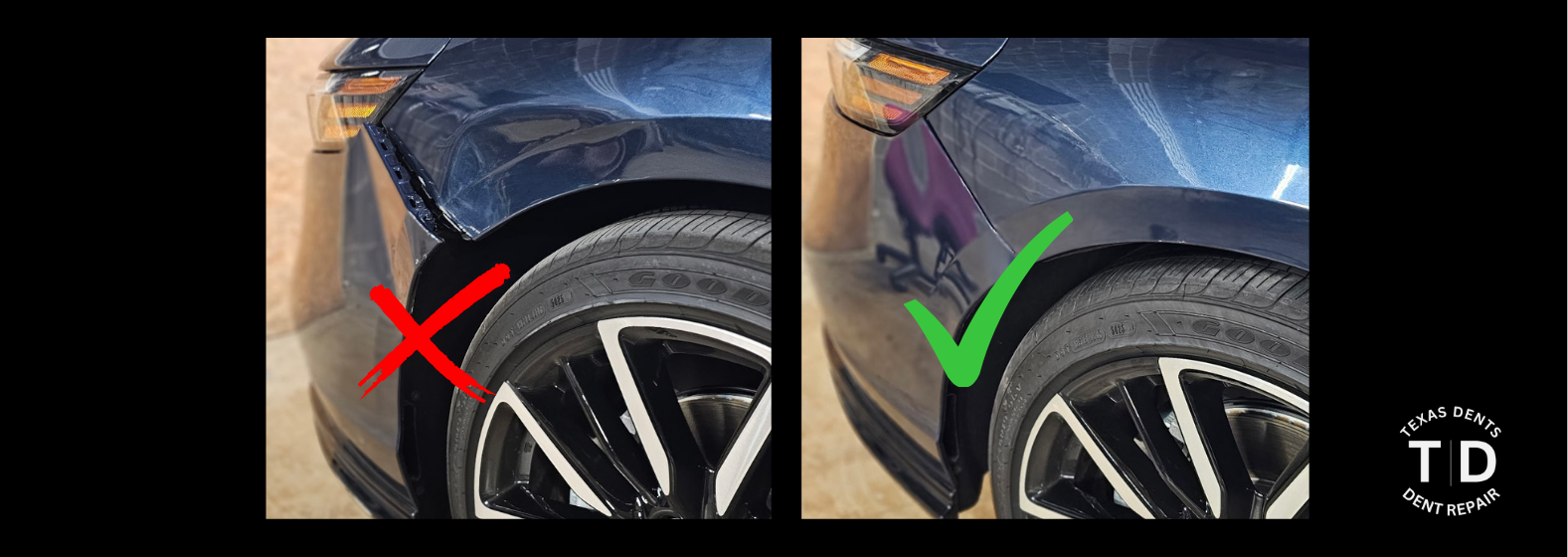
Many body-line dents can still be repaired using PDR.
They generally require more precision than damage on a flat section of a panel because the technician isn’t simply restoring a smooth surface. The original contour of the body line has to be recreated as well.
Some of the most impressive PDR before-and-afters come from body-line repairs because the damage can look so severe at the beginning.
Can You Use PDR if the Paint Is Scratched?
A scratch and a cracked finish are two different things.
If the dent has a light surface scratch but the paint itself is still sound, PDR may still be an option. The dent can be repaired and the scratch addressed separately if necessary.
If the impact caused the paint to crack, split or chip down to the underlying surface, PDR alone cannot restore the finish.
We may still be able to improve or completely repair the shape of the panel through paintless methods, but paint correction or conventional refinishing may be necessary afterward.
This is one reason photos can help with an initial assessment, but seeing the damage in person gives us the clearest picture.
Does PDR Work on Aluminum?
Yes, although aluminum has its own personality.
Many newer vehicles use aluminum for hoods, doors and other body panels. It behaves differently than traditional steel and can require different tools, techniques and considerably more patience.
Aluminum tends to be less forgiving once it has been stretched, which makes technician experience especially important.
So if someone tells you, “That panel is aluminum, so PDR won’t work,” that isn’t automatically true. The damage still needs to be evaluated.
Will the Dent Be Completely Gone?
This may be the most important question to ask.
Our goal with PDR is always to restore the panel as close to its original condition as the damage allows. Many properly repaired dents can become extremely difficult or impossible to detect under normal viewing conditions.
But we also believe in being realistic.
Metal remembers what happened to it. If a dent severely stretched the panel, crushed an edge, compromised a body line or damaged the paint, there may be limitations to what PDR alone can accomplish.
A good PDR technician should be willing to tell you that before the repair starts, not afterward.
Sometimes the right answer is PDR. Sometimes conventional body repair makes more sense. Knowing the difference is part of the job.
How Long Does Paintless Dent Repair Take?
It depends much more on the complexity of the damage than the size of the dent.
A straightforward door ding may be relatively quick. A long crease, difficult body-line dent or vehicle with extensive hail damage requires considerably more time.
Access also matters. Sometimes interior trim, tail lights or other components need to be carefully removed so the technician can reach the backside of a panel.
We’d rather spend the time necessary to make hundreds of small, controlled adjustments than rush a repair with one aggressive push.
PDR is precision work, not popping dents.
Should I Try a DIY Dent Puller First?
We understand the temptation. A suction cup or dent-puller kit online can look pretty convincing.
The problem is that metal doesn’t always move the way you expect.
Pulling too hard can create high spots, crowns or additional stretching that makes the original repair more difficult. There’s also a risk of damaging the paint with some glue-pulling products or techniques.
Before experimenting, let an experienced technician take a look. The dent may be much more repairable than you think, especially before someone has tried to “fix” it. Trust us, we've seen plenty of DIY gone wrong, which makes the dent much worse than it was.
The Easiest Way to Find Out if PDR Will Work
You don’t need to become a dent expert before calling us.
If your vehicle has a door ding, crease, hail damage, body-line dent or something you simply aren’t sure about, send Texas Dents a photo. We can usually tell a lot from a few good angles and let you know whether paintless dent repair is worth exploring.
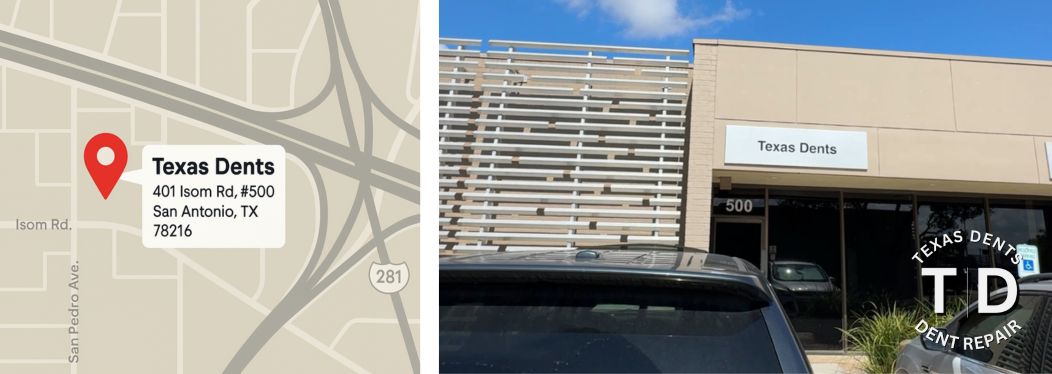
With locations serving San Antonio, Austin and Dallas, Texas Dents specializes in repairing the kinds of dents that make people ask, “Can you really fix that?”
Sometimes the answer may surprise you.

Share On: