

Beyond the Surface: What It Really Takes to Master Paintless Dent Repair in Texas
7018892985 • August 12, 2025
PDR isn't just "popping out a dent"—it's a highly skilled trade
To most people, paintless dent repair (PDR) sounds like a quick, almost magical fix—just “pop the dent out” and drive away. But if you’ve ever seen a real PDR technician at work, you know there’s nothing quick or simple about it. It’s a highly skilled trade that blends precision, engineering know-how, and hands-on craftsmanship. And in Texas—where hailstorms, parking lot mishaps, and highway debris are part of everyday life—PDR techs face some of the toughest, most complex vehicle damage you can imagine.
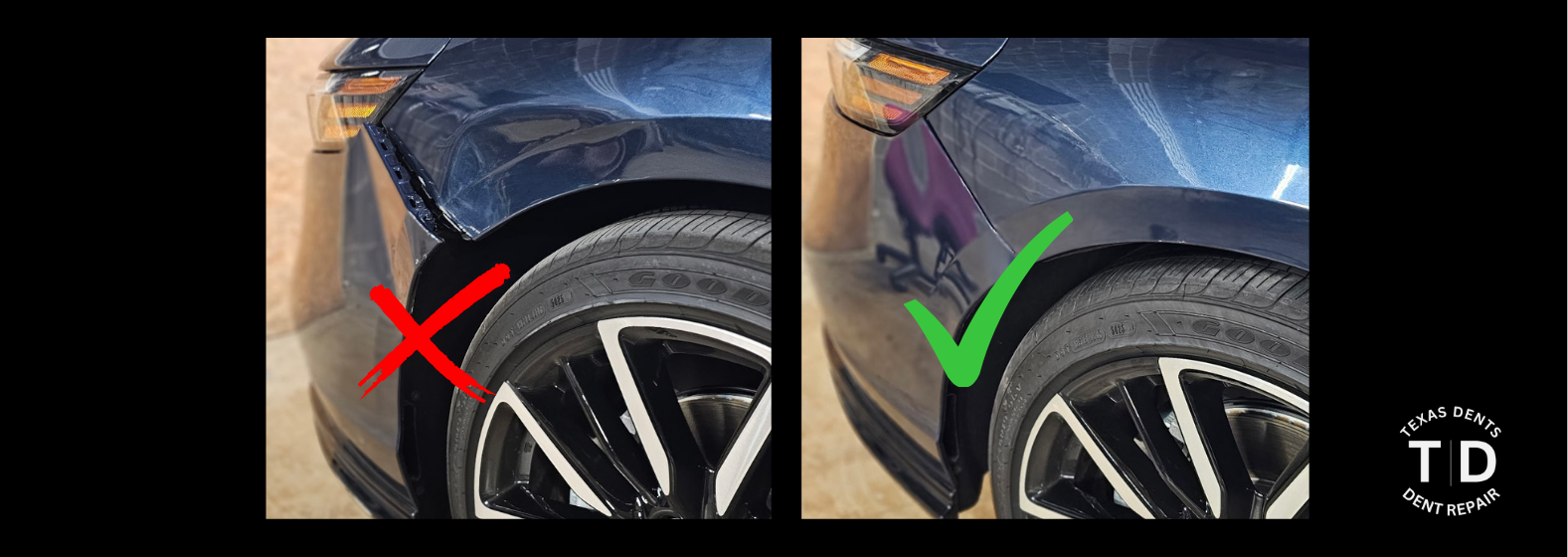
From the outside, the process looks like a few taps here, a few pushes there, and the dent disappears. In reality, PDR is part art, part science, and 100% patience. Let’s pull back the curtain on what it actually takes to become an expert in this trade—and why Texas Dents
is known for being the very best in the business.
Texas-Sized Damage: Why Our Cars Take a Beating
Living in Texas means dealing with vehicle hazards that drivers in other states rarely face at the same intensity:
Hailstorms
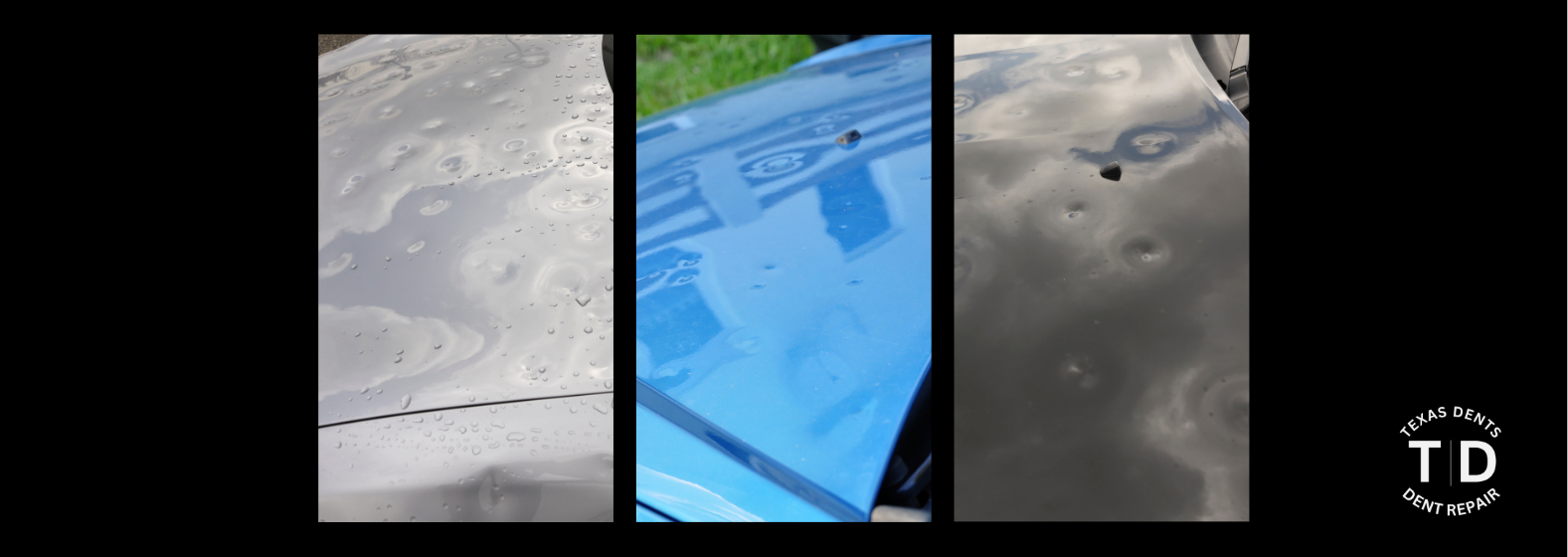
Central and North Texas are notorious for hail the size of golf balls (and sometimes baseballs), leaving hundreds of dents on a single roof and hood.
High Winds & Slamming Doors
Gusty days in open parking lots can send a door edge slamming into the car next to you.
Highway Debris
Gravel kicked up from oilfield trucks or loose cargo can cause dings along fenders and rocker panels.
Crowded Parking Lots
Tight spaces and big trucks means lots of inattentive door swings that lead to those familiar side-panel dents.
Every dent has its own unique “fingerprint” based on the force, direction, and location of impact—and every one requires a different repair approach.
Training for Precision: The Art and Science of PDR
Becoming a skilled PDR technician isn’t about learning one trick—it’s about mastering hundreds of small techniques and applying them in the right combination for each job.
Core training includes:
- Knowing exactly how much pressure to apply and where, so you’re pushing metal back into place without overcorrecting and creating a high spot.
- Understanding how different metals (like aluminum vs. steel) respond to pressure and heat.
- Knowing the internal structure of a door, hood, or quarter panel to avoid damaging reinforcements or bracing.
- Using specialized reflection lights to see even the smallest imperfections in the panel’s surface.
PDR techs often train for years—first learning on scrap panels, then working under experienced mentors—before they can confidently handle complex repairs on customer vehicles.
Why “Access” is Everything in PDR
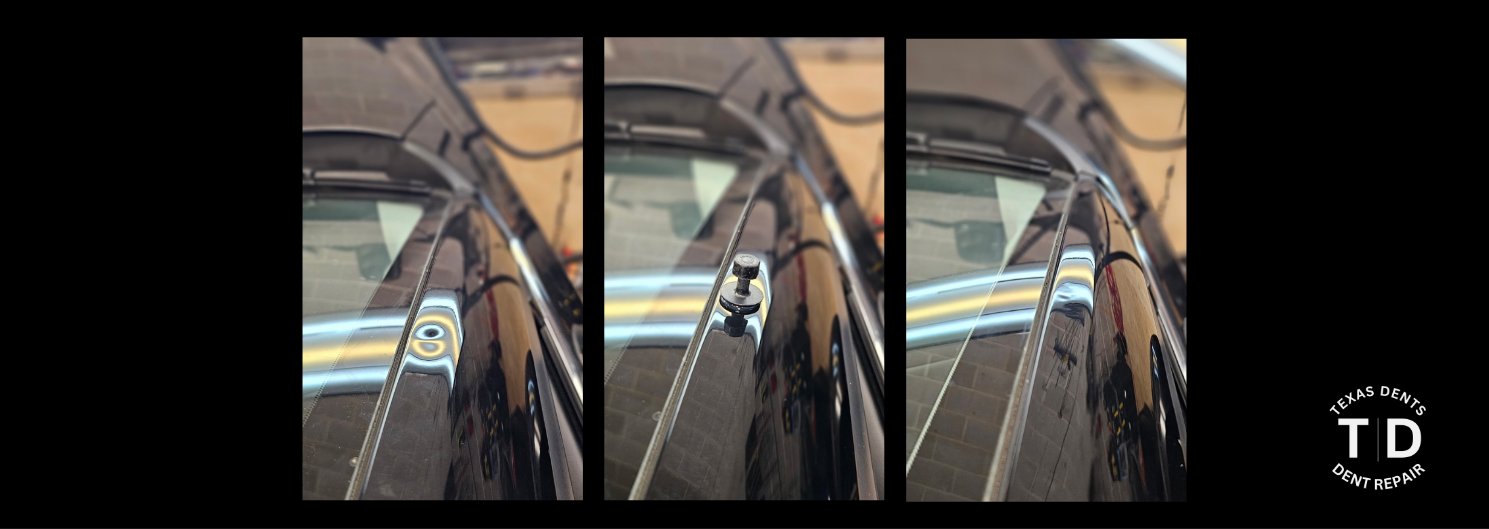
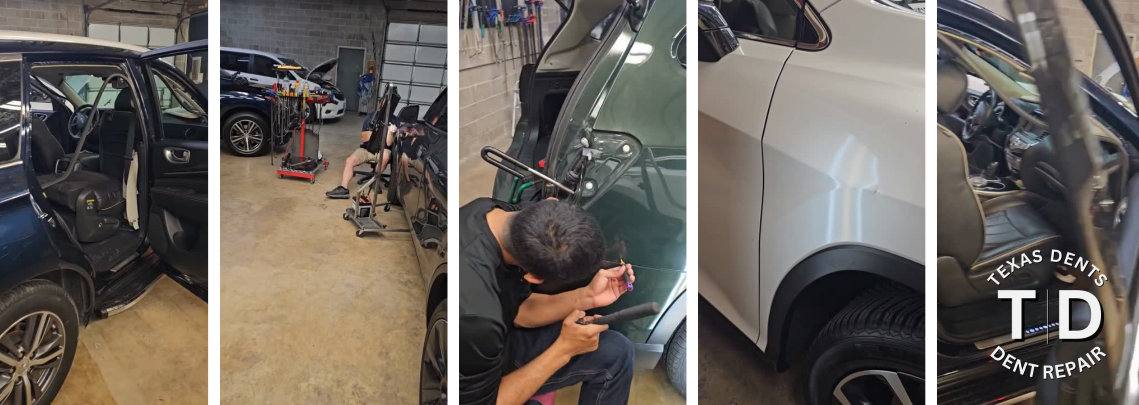
Here’s one of the biggest surprises for customers: fixing a dent often means partially taking your car apart.Why? Because PDR is all about working from behind the panel to slowly and precisely push the dent back into shape. To do that, technicians need access. That might mean:
- Removing door panels, tail lights, or trim pieces.
- Loosening the headliner to reach the roof from underneath.
- Taking off inner fender liners to get to dents on wheel arches.
This careful disassembly isn’t just about getting to the dent—it’s about getting to it at the perfect angle so the repair can be done without damaging paint, electrical components, or structural supports. And then, we have to put it all back together perfectly!
The Unseen Challenges of Dent Repair
Even the smallest dents can be deceptively tricky to fix. Here are some of the challenges PDR techs in Texas deal with daily:
Aluminum vs. Steel Panels
Aluminum is lighter and resists corrosion, but it’s less forgiving to work with, requiring different tools and techniques than steel.
Double Panels & Reinforcements
Some areas of your car have extra layers of metal for strength, which limits access and increases repair complexity.
Sharp vs. Soft Dents
A shallow dent can be easier to massage out, while a sharp dent with a deep crease takes much more finesse.
Factory Paint Preservation
The goal of PDR is to restore the panel without repainting, so every movement must be precise to avoid cracking or stretching the paint.
Why PDR is a Better Option Than Traditional Bodywork
For many types of damage, PDR is the smarter choice over traditional body shop repairs:
Keeps Original Paint
– No repainting means no risk of mismatched colors or fading over time.
Faster Turnaround
– Many jobs can be completed in hours instead of days or weeks.
Cost-Effective
– Without the labor and materials for repainting, PDR often costs less.
Retains Vehicle Value
– Keeping factory paint intact helps maintain resale value.
That said, PDR isn’t for every dent—if the paint is cracked or the metal is too stretched, a body shop repair may still be necessary. That’s why an expert evaluation is so important.
Why Skill (Not Just Tools) Makes the Difference
You can buy PDR tools online for a few hundred dollars—but that doesn’t make you a PDR technician. The real difference between a “cheap pop-out” and a flawless repair is the experience and patience of the person holding the tool.
A skilled PDR technician can:
- Blend repaired areas seamlessly with the surrounding surface.
- Work on high-end vehicles with complex body shapes.
- Handle severe hail damage with hundreds of dents.
- Know when PDR is appropriate—and when it’s not worth attempting.
- This is why choosing a company with trained, experienced techs is worth every penny.
Customer Satisfaction Speaks Volumes
Texas Dents has built its reputation on honesty, craftsmanship, and exceptional service. We don’t just take on the easy stuff—we specialize in the ones other shops walk away from. And our reviews prove it.
The impossible is just another day at Texas Dents. So the next time someone tells you your dent is beyond repair, let us take a look. Chances are, we can fix it faster, better, and more affordably than you thought possible. We proudly serve San Antonio, Dallas, and surrounding areas like Austin—and we’re always ready to prove what great paintless dent repair looks like. Let our experts take a look at your vehicle—you might be surprised at how quickly we can restore it. Give us a call today!
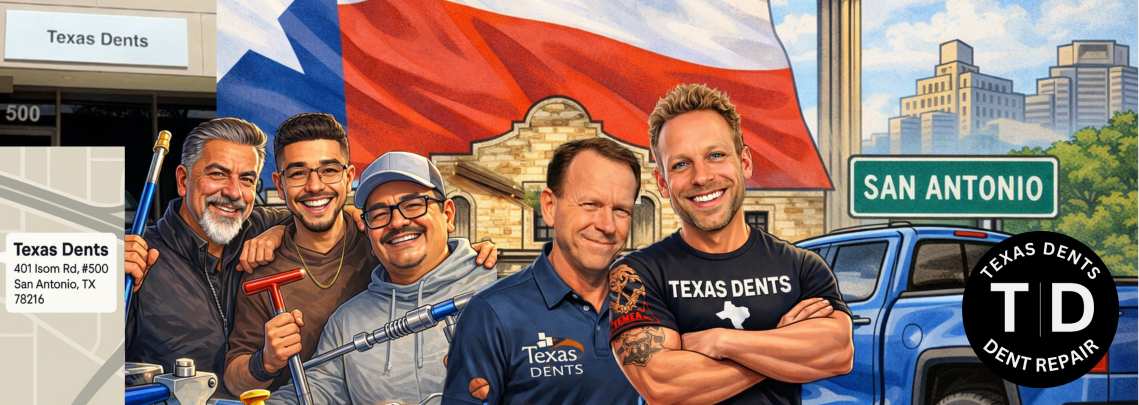
When it comes to protecting your car’s value, appearance, and performance, choosing the right dent repair shop matters. Across Texas, Texas Dents has built its reputation as the trusted name in paintless dent repair (PDR), delivering precision results for dealerships and individual car owners alike. At the San Antonio location, customers enjoy not only expert craftsmanship but also a convenient and accessible facility at 401 Isom Road, Suite 500. With plenty of parking, a large and modern garage, and a team of skilled professionals, Texas Dents stands out as the go-to solution for hail damage, door dings, and all forms of non-invasive dent removal. A Prime San Antonio Location One of the standout benefits of the San Antonio shop is its prime location at 401 Isom Road, just minutes from the San Antonio International Airport and central thoroughfares like Loop 410 and Highway 281. This makes it easy for customers across the city—and even surrounding communities—to drop off their vehicles without hassle. Unlike crowded, hard-to-find repair shops tucked into strip malls or hidden behind dealerships, Texas Dents in San Antonio offers plenty of parking in both the front and back of the building, ensuring a smooth, stress-free visit. Whether you’re stopping by for an estimate or leaving your car for more extensive hail repair, accessibility is never an issue. State-of-the-Art Garage Our San Antonio shop features a large, beautiful garage space designed with efficiency and customer service in mind. Paintless dent repair requires precision, specialized lighting, and room to maneuver around vehicles. Texas Dents has invested in creating a professional environment where their technicians can work to the highest standards. Bright, well-lit garage ideal conditions for spotting and repairing dents Ample workspace ensures vehicles are handled with care and remain protected while repairs are underway Clean, modern facilities give customers peace of mind that their car is in good hands For dealerships, this kind of facility is especially important. Moving multiple cars in and out quickly, safely, and professionally is a top priority—and Texas Dents delivers. Why Dealerships Trust Texas Dents San Antonio dealerships have their pick of repair shops, but time and again they choose Texas Dents because of the company’s proven expertise, efficiency, and customer service. For dealerships, reputation and turnaround time are everything. Having a trusted partner like Texas Dents allows them to maintain high standards for their inventory and customer satisfaction. Benefits for Dealerships: Fast, high-volume service Texas Dents can handle multiple cars at once, helping dealerships restore hail-damaged fleets quickly. Consistent quality Every dent is repaired with the same precision and care, ensuring vehicles are lot-ready. No paint, no fillers Because PDR preserves the factory finish, dealerships avoid devaluing vehicles with repaint jobs. Professional partnership The Texas Dents team communicates clearly, delivers on deadlines, and ensures dealerships can keep their promises to buyers. For dealerships looking for reliability, Texas Dents is more than a repair shop—it’s a trusted extension of their business. Why Customers Choose Texas Dents For individual car owners, the decision to visit Texas Dents often comes after a frustrating moment: walking out to find their car covered in hail dents, spotting a door ding from a parking lot, or noticing minor body damage after a storm. These situations are stressful, but Texas Dents makes the process simple and reassuring. What Customers Love: Convenience The Isom Road location is easy to find, with parking available right in front of the shop. Expertise Skilled technicians use advanced tools and years of experience to restore vehicles to like-new condition. Value Because paintless dent repair preserves the original paint and panels, cars maintain their factory finish and resale value. Transparency Customers receive honest assessments and clear estimates—no surprises, no upselling. Advantages of Paintless Dent Repair Texas Dents specializes exclusively in PDR, which has become the gold standard for addressing hail and minor body damage. Unlike traditional body shop repairs, which often require sanding, body filler, and repainting, PDR works with the metal itself, gently massaging dents out from the inside. Key Benefits of PDR: Preserves the original paint finish Maintains vehicle value Faster turnaround times than traditional bodywork Environmentally friendly (no chemicals or paints used) Often covered by insurance for hail damage By focusing on this one highly specialized skill, Texas Dents has become a leader in the field, trusted by dealerships and individual customers across San Antonio. Frequently Asked Questions Where is Texas Dents located in San Antonio? Texas Dents is conveniently located at 401 Isom Road, Suite 500, San Antonio, TX 78216, near major highways and the San Antonio International Airport. Is there parking available at the shop? Yes. Customers enjoy plenty of parking in both the front and back of the building, making drop-offs and pick-ups simple. Why should I choose PDR over traditional dent repair? PDR preserves your vehicle’s original paint and finish, maintains resale value, and is usually quicker and less costly than traditional bodywork. Do dealerships really use Texas Dents? Absolutely. Many local dealerships trust Texas Dents for hail repair and dent removal because of their ability to handle high-volume work quickly and with consistent quality. Why Choose Texas Dents for Paintless Dent Removal At Texas Dents San Antonio, everything is designed with the customer in mind. From the convenient Isom Road location and ample parking to the spacious garage and skilled technicians, every detail reinforces their reputation as the trusted name in PDR. Dealerships rely on them to keep their inventory flawless, and individual customers count on them to restore peace of mind after hailstorms or everyday mishaps. If you’re searching for expert dent repair in San Antonio, look no further than Texas Dents. With a commitment to quality, convenience, and customer satisfaction, they’re not just repairing cars—they’re restoring confidence, one dent at a time. For dealerships, this kind of facility is especially important. Moving multiple cars in and out quickly, safely, and professionally is a top priority—and Texas Dents delivers.

Texas, especially Central Texas, is a hotspot for hail due to its unique geography and climate. The state sits at the crossroads of warm, moist air from the Gulf of Mexico and cooler, dry air from the north and west. When these air masses collide, they create the perfect conditions for severe thunderstorms and hail.

Contrary to what many believe, PDR is not just a “pop-it-out” job. And our friends who try it themselves at home with a kit they bought on eBay and a YouTube video know this to be true! Lol. It's A LOT harder than it looks. It requires finesse and years of hands-on training. We've worked on every kind of vehicle there is for nearly 20 years, so we have a deep understanding of vehicle anatomy that many PDR shops don't possess.

On March 31, 2025, San Antonio experienced a severe thunderstorm that brought significant hail to various parts of the city. The storm developed rapidly over Medina County and moved southeast toward the SeaWorld area around 5:30 p.m. Residents were alerted to the potential for "ping-pong" sized hailstones, 60 mph winds and frequent lightning. By 6:30 p.m. yesterday evening, the National Weather Service reported that the severe thunderstorm over San Antonio had weakened and was no longer considered severe. However, two strong thunderstorms remained in the area: one over the south side of San Antonio moving southeast at 30 mph, capable of heavy downpours, small hail, and strong wind gusts; and another near SeaWorld, moving southeast toward JBSA Lackland and Von Ormy, with potential for penny-sized hail and 45 mph wind gusts. These storms were expected to weaken over the next 1-2 hours, with rain likely ending for Bexar County by 7:30 p.m. Ping-Pong Sized Hail Residents shared images and videos of the hail on social media platforms. For instance, KSAT Connect featured photos showing golf ball-sized hail in areas like Stevens High School and Culebra and Westover Hills. KENS5 and FoxSanAntonio posted pics and videos from nearby residents. Check out our Insta reel with some of the most compelling highlights ! The far west side of San Antonio, including the Loop 1604 and Potranco area, appeared to be among the hardest-hit regions. Videos captured heavy rain and quarter-sized hail, reducing visibility on neighborhood streets. Despite the intensity of the storm, the rain-cooled air led to a pleasant evening, with temperatures dropping into the upper 60s to 70s. Looking ahead, scattered storms with minimal impact are possible over the upcoming weekend, with temperatures expected to range from the mid-80s to low 90s. Exploring Hail Formation Hail formation—especially the large hail San Antonio experienced—is a fascinating (and intense!) weather phenomenon tied closely to the strength of thunderstorms. Why did the hail form? Hail forms inside strong thunderstorm clouds—specifically cumulonimbus clouds—when there are powerful updrafts (rising currents of air). Here’s the science behind it: Supercooled Water Droplets High in the storm cloud, temperatures are well below freezing, and water droplets remain in a liquid state below 32°F. These are called supercooled droplets. Nucleus Formation These droplets latch onto particles (like dust or pollen) and start to freeze—this becomes the nucleus of a hailstone. Updrafts Strong winds within the thunderstorm carry the tiny frozen stones upward, where they encounter more supercooled droplets. Each time they go up, they grow in layers—like an onion. Hailstone Growth Cycle The up-and-down motion in the storm can happen multiple times. Each cycle adds more layers of ice, increasing the size of the hailstone. Gravity Wins Eventually, the hailstone becomes too heavy for the updraft to support, and it falls to the ground—sometimes at speeds over 90 mph! Why Was the Hail So Big? Several factors made this storm ideal for producing large hail in San Antonio: The strength of the thunderstorm determines how long hailstones stay aloft to grow Reports from the March 31 storm showed hail up to golf ball and ping-pong ball size—which means the updrafts were strong enough to keep those stones suspended through several growth cycles The atmosphere was very unstable—a sharp contrast between warm, moist air near the surface and cold air aloft This instability supercharged the storm, helping hailstones form quickly and grow large Plenty of moisture in the atmosphere (likely from Gulf moisture moving inland) provided a continuous source of supercooled water for hailstones to grow The storm likely had supercell characteristics, meaning it was rotating and well-organized Supercells are notorious for producing large hail due to their powerful updrafts and long lifespan How Meteorologists Knew It Was Coming Weather radar can detect hail with a feature called dual-polarization, which picks up irregular shapes and high reflectivity in storms. The National Weather Service issued alerts predicting ping-pong-sized hail due to those radar signatures and storm conditions. Why Choose Texas Dents for PDR Texas Dents specializes in high-quality Paintless Dent Repair (PDR), proudly serving Austin, San Antonio, and Dallas with unmatched expertise and fast, affordable service. We restore vehicles to their original condition without the need for repainting, preserving their factory finish and value. We’re proud of our exceptional reviews, reflecting our unmatched reputation for quality and customer satisfaction. If your vehicle suffered hail damage in this storm, Texas Dents is the trusted choice for flawless repairs. We've been serving San Antonio area car dealerships for more than 15 years. Connect with us online for an estimate or you can call our San Antonio shop .


Share On: